Last updated November 18, 2026
DIY vs Professional ADU Builders: What’s Safe to Do Yourself
Nevada law lets homeowners act as their own contractor on the home they live in. That single fact pulls a lot of people toward DIY. But here’s the twist that surprises almost everyone: an accessory dwelling unit is often classified as a separate dwelling unit, not an addition to your house, and that classification quietly changes what you’re legally allowed to touch without a license. We’ve watched Las Vegas homeowners save real money on finishes and then lose it all on a permit that wouldn’t close. This guide draws the legal line, not just the skill line, so you know which work is safe to do yourself and which work can void your insurance.
Quick Answer
In Nevada, you can legally do your own painting, flooring, cabinets, and non-structural landscaping on your primary residence without a contractor’s license, including for a garage conversion. Anything involving electrical panels, new gas lines, structural framing under permit, or HVAC installation requires a licensed contractor, and a detached ADU usually falls under that stricter set of rules because it’s a separate dwelling unit. The money you save on finish work is real; the money you think you’ll save by skipping a licensed trade on mechanical or structural systems is almost always an illusion once insurance and resale enter the picture.
Table of Contents
- What Nevada’s owner-builder exemption actually allows
- What you can legally do yourself without a license in Nevada
- What requires a licensed contractor, no matter how handy you are
- The real cost gap between DIY-eligible and licensed work
- Insurance, resale, and the certificate of occupancy gap
- Las Vegas-specific factors that change the math
- Common mistakes to avoid
- When to call a professional
What Nevada’s owner-builder exemption actually allows
Nevada allows a homeowner to pull permits and do construction on a residence they own and occupy. That’s the owner-builder exemption, and it’s genuinely useful. The catch sits in the word “residence.” When you add a room to your existing house, you’re still working on one dwelling. When you build a detached structure with its own kitchen, bathroom, sleeping area, and separate entrance, the city may treat it as a second dwelling unit with its own occupancy rules, its own utility connections, and its own inspection sequence.
That distinction matters most in the Las Vegas Valley, where jurisdictions like Clark County and the City of Las Vegas each process ADU and garage conversion permits differently. A garage conversion in a neighborhood like Spring Valley often stays in the same permit category as a room addition because the structure is already attached and permitted. A new detached unit in Henderson or North Las Vegas typically triggers a longer review, and some of that review assumes licensed trades will sign the mechanical, electrical, and plumbing sheets.
Two things follow from that:
- You can usually self-perform more on an attached garage conversion than on a detached backyard unit.
- Whatever you self-perform, you still carry full code responsibility as the owner-builder. The inspector is not your teacher, and a failed inspection costs you the re-inspection and the delay.
If you’re weighing a conversion against a new build, our Garage Conversion Contractor in Las Vegas page walks through how the permit path differs from a ground-up ADU.
What you can legally do yourself without a license in Nevada
Most of the work people actually enjoy doing falls on the legal side of the line. These tasks generally don’t require a contractor’s license when you’re working on your own primary residence, and they don’t require a licensed trade to sign off:
- Interior painting and drywall finishing. Primer, paint, patching, texture matching. No license needed, and the risk of catastrophic error is basically zero.
- Flooring. Luxury vinyl plank, tile on a flat substrate, laminate. This is where a lot of owner-builders save the most money per hour of their own labor.
- Cabinet and countertop installation. Hanging cabinets and setting a prefab countertop doesn’t require a license. Cutting into a wall to relocate a drain for a sink does.
- Non-structural landscaping. Pavers, gravel, xeriscape planting, raised garden beds, and most fencing. Las Vegas water restrictions reward drought-tolerant landscaping, and you can do that work yourself.
- Finish carpentry and trim. Baseboards, door casings, closet shelving, interior doors that hang in an existing frame.
- Insulation and weatherization in accessible areas. Batting an open wall before drywall goes up is legitimate owner work.
None of this requires a licensed pro to sign anything, and none of it puts your certificate of occupancy at risk. It’s also the work that eats the most hours, which is exactly why it’s the best place to spend your own weekends.
What requires a licensed contractor, no matter how handy you are
This is the part of the list that gets homeowners into trouble. In Nevada, these categories need a licensed, insured contractor even when you’re the owner-builder, and some of them are genuinely dangerous to touch without training:
- Electrical panel work and new circuits. Adding a subpanel, running a new feeder, or wiring a detached unit’s service requires a licensed electrician. Panel work can kill you, and an unpermitted panel is one of the first things a buyer’s inspector flags.
- Gas lines. Any new or relocated gas line, including a line run out to a detached ADU kitchen or a tankless water heater, requires a licensed plumber and a pressure test. Gas leaks don’t announce themselves.
- Structural framing under permit. If you’re cutting into a load-bearing wall for a new opening, adding a beam, or framing a new roof structure, that’s engineered and inspected work. A failed header in a Las Vegas windstorm is not a repair you want to chase.
- HVAC installation and ductwork. Permitted mechanical work needs a licensed contractor. Sizing a system for a 500-square-foot ADU in 110-degree July heat is not a guess you want to make.
- New plumbing rough-in. Moving drains, adding a bathroom wet wall, or tying a detached unit into the sewer line requires a licensed plumber and inspection.
If your project involves a garage conversion, the electrical and plumbing rough-in is where most of the licensed work concentrates. We’ve seen homeowners try to hand their own electrical, get red-tagged, and pay a licensed electrician twice as much to undo and redo it. The safety point is simpler than the cost point: panel work, gas, and structural framing can injure or kill, and they carry consequences that follow the house, not just the project.
The real cost gap between DIY-eligible and licensed work
Here’s where the self-qualification gets honest. The savings on finish work are real. The savings on mechanical and structural work are usually not, once you price the permit, the inspection, and your own time.
For a garage conversion in the Las Vegas market, homeowners can typically self-perform the finishing scope and shave a meaningful slice off the total. But the licensed-trade portion is the part you can’t touch, and it’s also the part where the permit drives everything else. If you’re pricing a room addition or a detached unit, the licensed scope is the majority of the cost, not a side item.
Two reminders that hold across the valley:
- The written quote you get from a builder should separate licensed-trade scope from finish scope, so you can see exactly where your own labor is worth spending.
- You cannot self-perform your way out of a permit that requires a licensed sign-off. The inspection sheet doesn’t care how good your work looks.
For a full walkthrough of what a conventional room addition involves, our Room Addition Contractor in Las Vegas page breaks down the scope and the permit sequence.
Insurance, resale, and the certificate of occupancy gap
This is the part that doesn’t show up on a YouTube tutorial. If your ADU work wasn’t permitted and inspected, three things can go wrong that have nothing to do with whether the work looks finished:
- Insurance can deny a claim. Many policies exclude or limit coverage for unpermitted structures and unpermitted electrical or gas work. If a fire starts behind a self-wired subpanel, an adjuster will ask for the permit, and “I did it myself” is not an acceptable answer for the carrier.
- You can’t get a certificate of occupancy. A certificate of occupancy is the document that legally allows someone to live in a dwelling unit. Without it, your ADU isn’t a legal living space, no matter how nice the finishes are.
- Resale gets complicated. Lenders won’t finance what isn’t permitted, buyers will ask, and a title issue can delay or kill a sale. A bank appraiser for the buyer’s loan will flag an unpermitted second kitchen fast.
In our experience across Las Vegas, the most expensive outcome isn’t the DIY work that goes wrong. It’s the certificate of occupancy gap that turns a completed ADU into a structure the county doesn’t recognize and the buyer’s lender won’t underwrite. If you want to see how a fully permitted, inspected project is supposed to close, our ADU Builders in Las Vegas page covers the sequence from permit to certificate of occupancy.
Las Vegas-specific factors that change the math
Las Vegas isn’t a neutral backdrop for this decision. Several local realities push the licensed side of the equation harder than they would in a milder, more forgiving market:
- Heat. A 110-degree summer is unforgiving on HVAC sizing and on any building envelope you self-perform. Undersized cooling in an ADU becomes a comfort complaint every June, and a failed one is a warranty call.
- Xeriscape rules. The Southern Nevada Water Authority limits turf and pushes drought-tolerant landscaping. DIY landscaping is legal and worth doing, but the design has to comply with local water rules.
- Soil and slab conditions. Caliche and expansive soil in parts of the valley change foundation design for detached units. That’s engineered work, not owner framing.
- HOA rules. Many Las Vegas-area communities restrict detached ADUs, garage conversions, and rental use. HOA approval can be its own hurdle, and we’ve seen it sink a project before the permit is even filed.
- Jurisdiction differences. Clark County, Henderson, North Las Vegas, and the City of Las Vegas each process ADU permits on their own timelines. A project that sails through in one can stall in another.
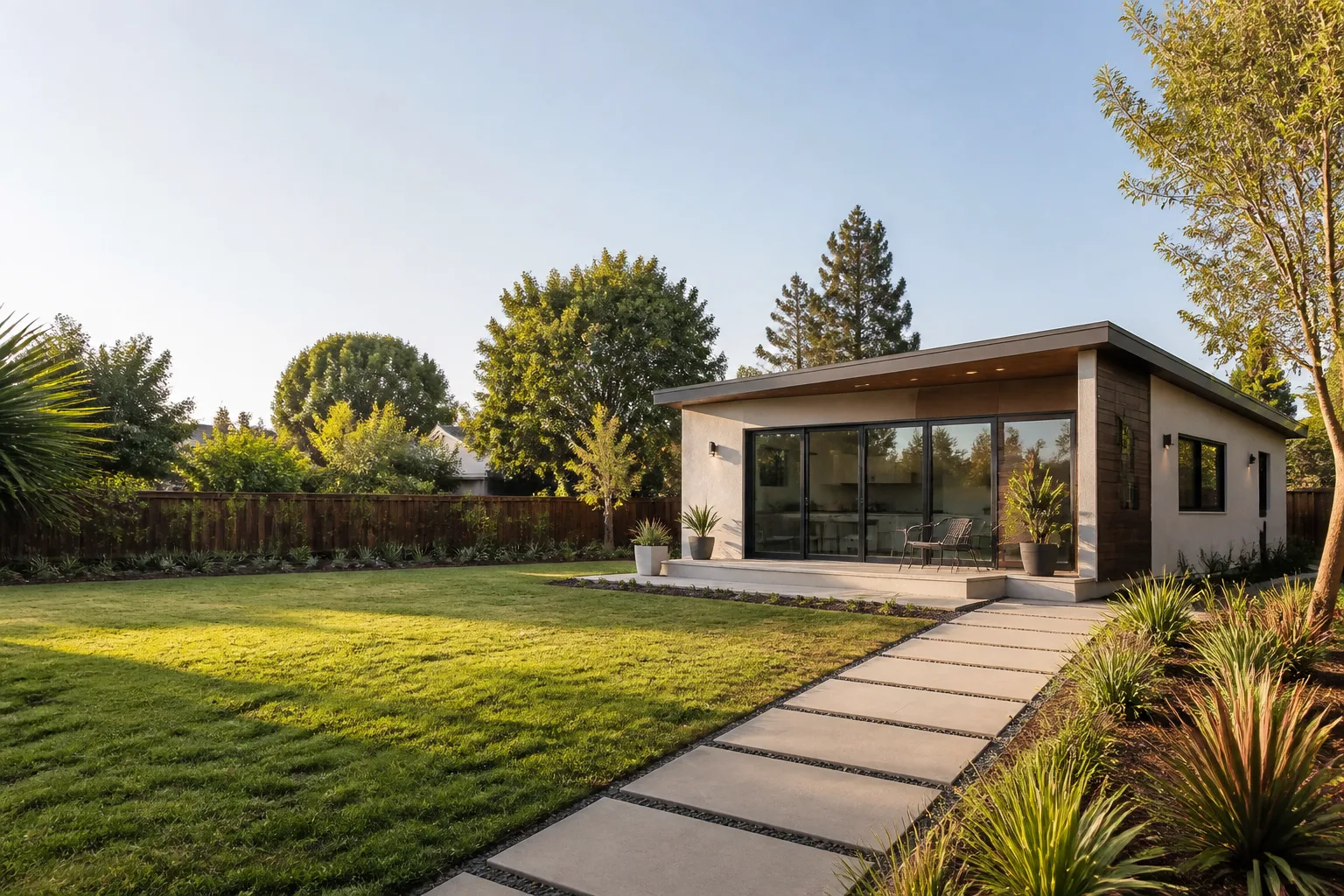
We work with prefab and modular platforms like Abodu and Cover, and with conventional builds using James Hardie siding, precisely because the right build method changes with the lot and the jurisdiction. A detached prefab unit on a Las Vegas side yard is a different permit conversation than a garage conversion in an established neighborhood. If you want the full picture of build options, our Fielding ADU Builders Las Vegas home page lays out the methods side by side.
Common Mistakes to Avoid
- Assuming owner-builder covers a detached ADU. The exemption is written around your primary residence. A separate dwelling unit can trigger stricter requirements, and assuming otherwise is the mistake that stalls the whole project.
- Self-wiring a new circuit to save on electrician cost. The hours saved are nothing against a red tag, a re-inspection, and an insurance denial if a fire follows.
- Skipping the HOA conversation before the permit. Las Vegas-area HOAs commonly restrict detached ADUs and conversions. A design that violates HOA rules can’t be rescued by a contractor later.
- Finishing before the rough-in inspections. Drywall over unpermitted electrical or plumbing forces a tear-out. Inspectors don’t open walls for you.
- Using “I did it myself” as a resale answer. Buyers and lenders ask for permits and a certificate of occupancy. If the ADU isn’t a recognized legal dwelling unit, the answer gets expensive.
- Under-sizing HVAC for the desert. A system that works in April fails in July, and it’s the single most common comfort complaint we hear about owner-built conversions.
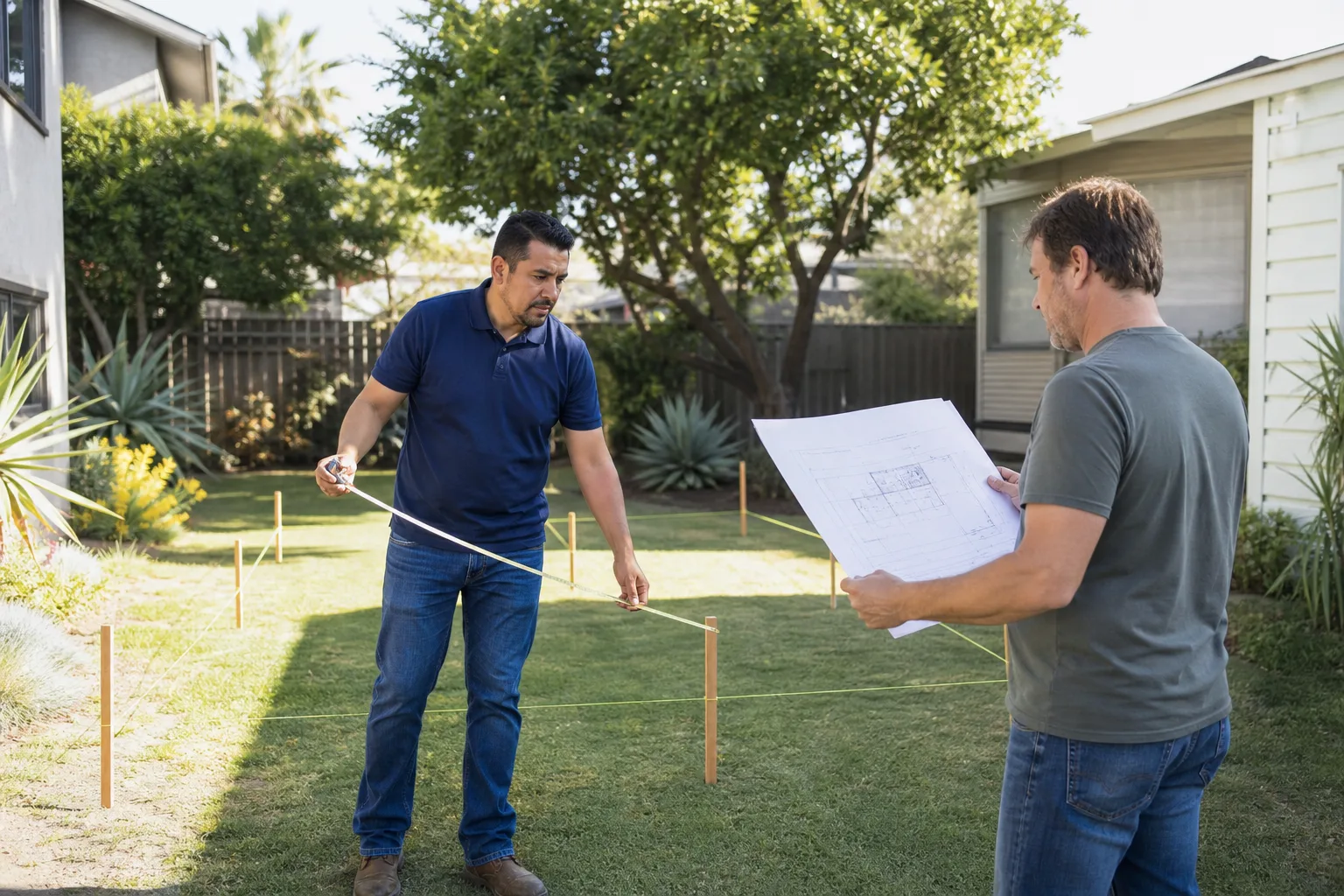
- Forgetting the setback rules. A detached unit has to respect the property line, and building closer requires a setback variance, which is the city’s written permission to build outside the standard rule. That’s a process, not a weekend project.
When to Call a Professional
Call a licensed professional the moment your project touches a panel, a gas line, structural framing, or a new HVAC system, and call before you file the permit so the scope is right the first time. Call before you build a detached ADU, and call if your HOA or the county has already flagged an unpermitted structure. Call if you’re inheriting a half-finished garage conversion and need the paperwork cleaned up before resale. The finish work can wait for your weekends. The parts that carry legal and insurance consequences shouldn’t. Fielding ADU Builders Las Vegas offers free estimates, and the number goes in writing before any work starts. Call (888) 418-2161 to schedule yours.
Frequently Asked Questions
You can self-perform finish work like painting, flooring, and cabinets on your primary residence, but a detached ADU is usually classified as a separate dwelling unit and requires licensed trades for electrical, gas, plumbing, structural, and HVAC. In practice, most Las Vegas homeowners need a licensed contractor for the mechanical and structural scope even when they do the finishes themselves. Call (888) 418-2161 for a free estimate on what your specific project requires.
Painting, flooring, cabinet installation, non-structural landscaping, finish carpentry, and accessible insulation on your primary residence don’t require a contractor’s license. Anything touching a panel, a gas line, structural framing under permit, or HVAC does. If you’re unsure which side of the line a task falls on, call (888) 418-2161 and we’ll tell you straight.
Yes. Many policies exclude or limit coverage for unpermitted electrical, gas, and structural work, and an unpermitted structure can complicate a claim. The safest path is to keep all permitted work with licensed trades and keep the inspection records. Our estimates are free and written, so call (888) 418-2161 to price the licensed scope before you start.
The savings are real on finish work and mostly illusory on mechanical and structural work. You can comfortably save on painting, flooring, and cabinets; you can’t legally save on the panel, gas, or HVAC scope, and self-performing those risks a red tag and a double charge to redo it. Call (888) 418-2161 for a written estimate that separates the two scopes.
Yes. An ADU is a dwelling unit, and without a certificate of occupancy it isn’t a legally recognized living space, which affects financing, resale, and insurance. Getting one requires permitted, inspected work from start to finish. Call (888) 418-2161 if you’re starting the permit process and want the licensed scope priced upfront.
A setback variance is the city’s written permission to build closer to the property line than the standard rule allows. If your planned detached ADU sits inside the required setback, you’ll need one, and approvals vary by jurisdiction across Clark County, Henderson, and North Las Vegas. Call (888) 418-2161 for a free estimate and we’ll walk through whether your lot needs one.
The Bottom Line
The divide between DIY and professional isn’t about how capable you are. It’s about which work Nevada law lets you self-perform and which work a certificate of occupancy and a buyer’s lender won’t accept from your own hands. Painting, flooring, cabinets, and landscaping are yours to take on, and the savings are real. Electrical panels, gas lines, structural framing, and HVAC belong with licensed trades, and skipping them risks your insurance and your resale. Start with the legal line, price the licensed scope in writing, and let the finish work be the part you do yourself. Our technicians have up to 20 years of experience, every project gets a written price before work starts, and The Garrison Standard backs it for 365 days. Call (888) 418-2161 for a free estimate in Las Vegas.
Written by the team at Fielding ADU Builders Las Vegas.